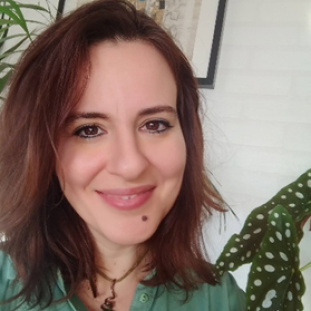
I am carrying out a double doctorate at the University of Groningen, Netherlands (Faculty of Arts, Groningen Institute of Archaeology) and the IMT Lucca, where I am enrolled as a joint-PhD Candidate in the Analysis and Management of Cultural Heritage track. I am a member of the LYNX Research Unit, the Center for the interdisciplinary Analysis of Images.
After graduating in archaeology and history, I turned my focus toward cultural heritage management and computational methods to explore how “the past shapes the present and the present shapes the past” (D. Lowenthal). I am interested in computational methods to foster reflexive approaches to the human past from a transdisciplinary perspective and in innovative digital strategies to better promote the tangible and intangible cultural heritage.
My PhD research aimed to build both a suitable theory and a new GIS-based methodology for predicting potential shipwreck locations in Mediterranean territorial waters. Parallel to my PhD thesis, I am also cooperating with the ComplexityLab, Faculty of Physics, at the University of Barcelona to apply formal network analysis to the study of Mediterranean shipwreck cargoes; this project was partially funded by the Catharine van Tussenbroek Foundation, which awarded me research grants in 2021 to finalize the analysis. Preliminary results were presented at the 2018 Theoretical Roman Archaeology Conference (Edinburgh) and the 2020 Comsotec Conference (Burgos)
Scholarschips and Grants
2021 Catharine van Tussenbroek Scholarship
2015-2016 ERASMUS+ Mobility Consortium
Profiles:
University of Groningen Profile
Publications:
Brughmans, T., Hanson, J.W., Mandich, M.J., Romanowska, I., Rubio- Campillo, X., Carrignon, S., Collins-Elliott, S., Crawford, K., Daems, D., Fulminante, F., de Haas, T., Kelly, P., Moreno Escobar, M. del C., Paliou, E., Prignano, L., Ritondale, M., 2019. Formal Modelling Approaches to Complexity Science in Roman Studies: A Manifesto. Theoretical Roman Archaeology Journal, 2(1): 4, pp. 1-19.
This publication resulted from the insightful debate around the contributions presented at the Theoretical Roman Archaeology Conference held at the University of Edinburgh in 2018, in the session titled ‘Formal Approaches to Complexity in Roman Archaeology.’ The ten-point manifesto highlights the great potential of complexity science and formal modelling for Roman studies by presenting different theoretical perspectives and formal modelling tools
Ritondale, M. 2018. Review of David Jacoby, Travellers, Merchants and Settlers in the Eastern Mediterranean, 11th-14th Centuries, in Journal of Greek Archaeology. 3, p. 504-508
Ritondale, M. 2017. Review of Peggy Levitt, Artifacts and allegiances. How museums put the nation and the world on display. University of California Press. 2015. In : Predella, Journal of visual arts. 39: 131-134
Ritondale M. 2014. Deep discoveries from the seabed of the Pontine Islands: the shipwrecks of Ventotene, Santo Stefano and Zannone, in Assemblage 13. The Sheffield Graduate Journal of Archaeology, pp. 26-38.
Gambin, T., Ritondale M., Zarattini A., I cinque relitti di Ventotene, in Ghini G. (ed.), Lazio e Sabina 6. Atti del Sesto Incontro di Studi sul Lazio e la Sabina Roma 4-6 marzo 2009. Edizioni Quasar. Roma 2010